Sometimes you can see that your air conditioning isn’t cooling off outside. If the AC line set insulation is degraded, falling apart, flaking off, or has exposed sections, the refrigerant line is exposed. The pipe is being exposed to heat; it is not keeping cool temperatures as well as it should, and it affects the efficiency of the unit.
Along with that, there are a lot of other issues. In this blog, we will discuss this topic in more detail.
Check the AC Line Set Insulation
The AC line set handles the refrigerant. It starts at the AC unit and goes all the way up and enters the house.
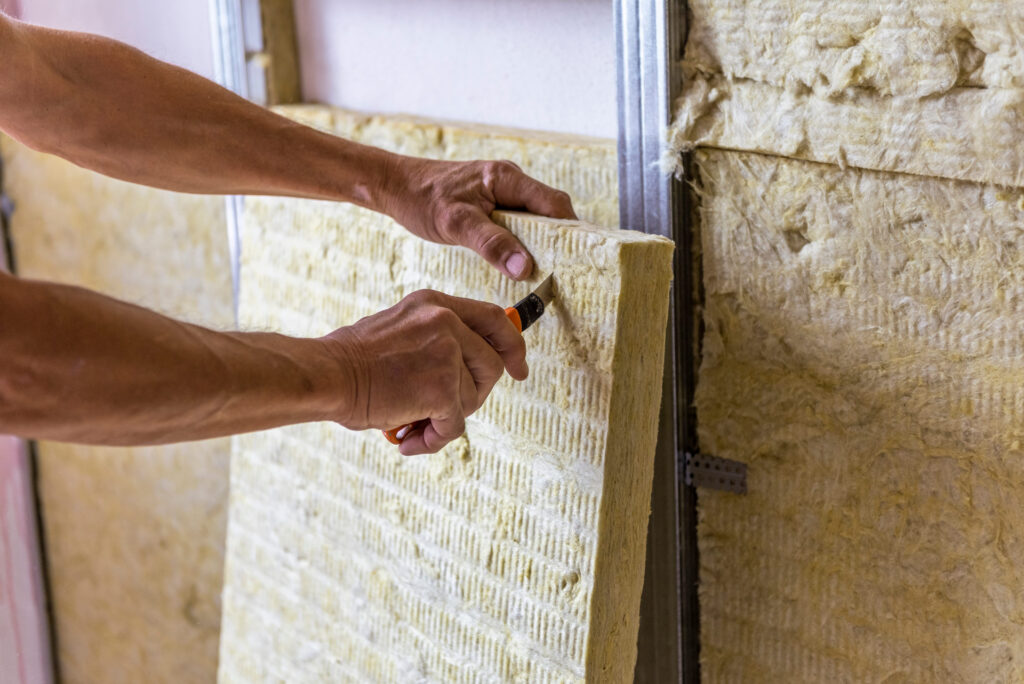
Insulate Your Walls to Keep The Cool Air In!
When there is exposed metal where the refrigerant is running through, it is very cold. You want it to stay cold, but if it is exposed, especially the more of the line that is exposed, there will be heat gain. The pipe is being exposed to heat, and it is not keeping cool temperatures as well as it should, which affects the efficiency of the unit.
The insulation degrades because it is exposed to the elements and, more specifically, the UV rays from the sun.
If the insulation looks flaky, has holes, or gets thinner and thinner, consider replacing the insulation on the AC lines.
Remove the Damaged Insulation
Remove any damaged insulation from the lines.
Using a knife, carefully score down the insulation. It comes off very easily, especially if it is already crumbling.
Be careful not to cut any of the wiring running along the line set.
Remove all of the damaged insulation going all the way up to where the lines enter the house.
After removing the damaged insulation, there is a wire and two separate lines. Make sure it stays as cool as possible and there is no condensation forming on top.
Install New Insulation
Install standard rubber pipe insulation around the larger refrigerant line.
The insulation opens all the way down with adhesive underneath the strips. Remove the strips, push the insulation together, and the adhesive sticks together to close everything up and seal it nice and tight.
Install the insulation as far up and as close to the house as possible.
Cut the insulation to the correct length, remove the adhesive strips, connect the two sides, and make sure the line is fully encapsulated in the insulation.
Tape and Seal the Line Set
After the insulation is installed, wrap line set tape around the insulation and the wiring.
The line set tape is UV resistant and made for this job. Wrap the tape around the lines in several places to reinforce the insulation, hold everything together, and combine the wiring with the insulation so it is not floating around freely.
With the insulation installed tightly on the pipe, the line is able to retain its temperature as efficiently as possible.
Apply silicone caulk around the lines where they enter the house to make sure everything is sealed.
Protect the Insulation
The insulation is installed, the tape is wrapped around it, and the lines are sealed where they enter the house.
A lot of people would consider the repair done because the insulation is installed and everything is sealed up nicely.
The outlet cover comes in two separate pieces so it wraps around the line set. It also comes in different sizes for different insulation sizes and different gasket options depending on the wall surface.
The lower portion fits around the line set. Place the top portion over it, make sure the gaskets overlap, connect the two halves with the supplied screws, and secure the outlet cover to the wall.
Run a bead of caulk around the perimeter of the gasket.
Wrap the UV protective sleeve around the insulated line. The sleeve has Velcro on each side to hold everything together. Install the hose clamp over the sleeve and tighten it just enough to hold the sleeve onto the outlet. Secure the other end with the supplied zip tie.
The UV protective sleeve protects the insulation from the UV rays so the insulation does not rot again.
The refrigerant running in the lines is able to stay as cold as possible, which means the AC unit is able to run as efficiently as possible.
Check for Air Escaping
If the fan is running but there is no cold air inside the home, check for openings where the air may be escaping.
Check the ductwork for disconnected sections or openings.
There was a disconnect on the vent duct, and there was air blowing all over the attic. Push the vent duct together, realign it, tape it up, and check the ductwork to make sure everything is connected.
FAQs
What happens when the AC line set insulation is damaged?
When you have exposed metal where the refrigerant is running through, it’s very cold. You want it to stay cold, but if it’s exposed, you’re going to have what’s called heat gain. The pipe is being exposed to heat, and it’s not keeping cool temperatures as well as it should, which affects the efficiency of your unit.
Why does the AC line set insulation degrade?
The insulation degrades because it’s exposed to the elements, and more specifically, the UV rays from the sun. If the insulation looks flaky, has holes, or gets thinner and thinner, consider replacing the insulation on the AC lines.
How should the new insulation be installed?
Get the insulation as far up and as close to the house as possible. Remove the adhesive strips, push the insulation together, connect the two sides together, and make sure the line is fully encapsulated in the insulation.
Why should the line set be taped and sealed?
Wrap the line set tape around everything to make sure everything is nice and tight. Apply silicone caulk around the lines where they enter the house to make sure everything is sealed.
How can cooling be lost inside the home?
There was a disconnect on the vent duct and there was air blowing all over the attic. Push the vent duct together, realign it, tape it up, and check the ductwork to make sure everything is connected.