Nothing is more frustrating than living in a noisy home. Whether noise comes from traffic outside, footsteps upstairs, loud neighbors, or another room, it affects sleep quality, comfort, and focus. Normally, homeowners use quick fixes like installing curtains, setting door seals, and adding rugs, but these are temporary.
The real problem is noise traveling through your home’s walls, pipes, poorly insulated areas, and ceiling. The real solution to this real problem comes from professional soundproofing.
Expert soundproofing solutions identify where noise is coming from and where it is transferring into your home, and then install the right insulation to provide you with a peaceful living space.

Soundproof Your Home Today
What We Do to Soundproof Your Home? Step-by-Step Guide.
Listed below are 4 steps we follow to soundproof your home.
Step 1: We Inspect the Noise Problem Areas
We inspect the areas in your home where noise is a problem. This inspection pinpointed the source of the noise and how it is traveling throughout your space. Noise enters through the ceiling, basements, pipe penetration, electrical outlets, air gaps, poorly insulated wall cavities, and floors. Our insulation experts look at your home for different types of noise problems, such as airborne noise, impact noise, and flanking noise. Airborne noise comes from neighbors, traffic, and TV sound, while impact noise comes from movement between floors, dropped objects, and footsteps. Flanking noise travels along hidden pathways in your home, such as through frames, pipes, mechanical spaces, and gaps. We inspect the noise-prone areas to understand where the problem lies in your space so that we can provide a solution tailored to the issue.
This inspection helps us understand whether your home needs better sound absorption, sound blocking, air sealing, or a combination of insulation solutions.
Step 2: We Recommend the Right Soundproofing Insulation
We recommend the right soundproofing insulation after inspecting the noise-prone areas of your home. We help you choose insulation materials based on the level of sound control you ned, noise source, wall cavities, and room structure. Our team recommends whether your home needs better sound absorption, air sealing, sound blocking, or a combination solution after exploring the entire space.
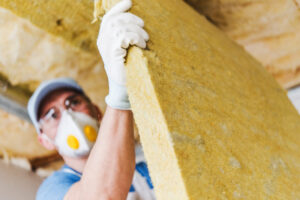
The most common soundproofing insulation options are fiberglass, mineral wool, cellulose, and spray foam. Fiberglass insulation helps you reduce sound transfer through ceilings and interior walls, while mineral wool insulation is an ideal choice for stronger acoustic insulation.
Cellulose insulation works well on insulation walls, while spray foam insulation is recommended to seal small openings, air leaks, and gaps. Acoustic sealing around pipe penetration, framing gaps, and mechanical spaces to decrease the hidden noise path. Experts know the difference between spray foam and fiberglass insulation and help you choose the best insulation solution based on your home’s requirements.
Step 3: We Install Insulation in Key Sound Transfer Points
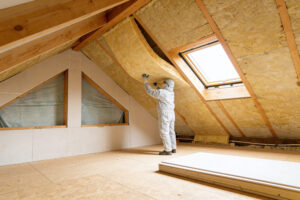
We install insulation at key sound-transfer points, including shared walls, bedrooms, media rooms, attics, crawl spaces, pipes, mechanical rooms, and home offices. Our team targets the right sound transfer points for insulation to ensure that your home feels quieter and more private than before.
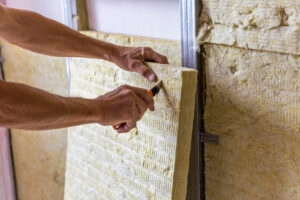
We emphasize filling open cavities and sealing gaps to reduce room-to-room noise and improve overall sound absorption. We focus on proper insulation to enhance the overall performance of soundproofing systems. Our team ensures that all small openings around frames, outlets, and pipes are insulated, as even a small opening can diminish the system’s effectiveness and quality.
Step 4: We Help You Experience a Quieter, More Comfortable Home
We help you experience a quieter, more comfortable home once we are done soundproofing walls, floors, bedrooms, and other key sound-transferring points. A well-insulated space reduces neighbor noise, footsteps, HVAC noise, and everyday room-to-room distractions.
Our customer’s experience improved in their sleep cycle, overall focus, and comfort level after we insulated the entire space. Insulation helps homeowners achieve energy efficiency by improving thermal comfort while reducing air leaks.
We provide residential soundproofing insulation services in New Jersey for homeowners who want to increase home privacy while reducing unwanted noise and distractions. Contact our team at DJG Insulation and request a free estimate for home soundproofing services.
How much does it cost to soundproof a house?
The cost of soundproofing a house in NJ depends on 4 factors: the areas being treated, the type of noise problem, the materials used, and the size of the home. Soundproofing a room costs less than soundproofing an entire house. The final price of soundproofing a house also depends on factors such as pipe runs, floors, ceilings, insulation type, and air gaps. We recommend that you contact DJG Insulation and schedule an inspection. Our professional will inspect your space and provide an exact estimate for the NJ soundproofing solution best suited to your home.
FAQs
How do I block noise on a shared wall?
You need to reduce sound transfer through the wall cavity and seal the gaps between walls to block noise on a shared wall. The best soundproofing insulation material for shared wall noise blocking is fiberglass and mineral wool. Acoustic insulation also absorbs sound inside the wall.
How to block 100% of sound?
Blocking 100% of sound is realistically not possible in a normal home because sound travels through ceilings, doors, windows, structural frames, and walls. Homeowners can reduce noise by combining air sealing with soundproofing insulation.
How do I stop noise coming through the walls?
You can stop noise from passing through walls by using soundproofing insulation such as spray foam, cellulose, mineral wool, or fiberglass. Insulation products absorb sound within walls, helping you stop noise from passing through. It’s always a good idea to get professional wall soundproofing services because experts use the right insulation material for your walls while sealing gaps around pipes, cracks, frames, and outlets for optimal noise control.
How do you soundproof a room for snoring?
You can soundproof a room for snoring by using air sealing and insulation. You can soundproof the walls and ceilings so the snoring noise is bedis absorbed inside them. It is important to seal gaps around doors, outlets, and wall openings to prevent snoring from traveling to nearby rooms.
Does soundproofing reduce echo?
Yes, soundproofing reduces echo by using sound-absorbing materials. You can use acoustic panels and acoustic insulation to prevent sound from reflecting off hard surfaces like ceilings, windows, floors, and walls. You can reduce echo by adding carpets, furniture, and curtains in the room.
What blocks out the most noise?
Dense materials and properly installed soundproofing systems block the most noise. When you want to reduce strong noise in your home, you can rely on a combination of fiberglass insulation, sealed air gaps, acoustic sealants, insulated ceilings/floors, and solid doors. You must understand that no single material is effective at reducing sound in every situation. Therefore, an expert helps you soundproof a home by combining sound absorption, sound blocking, and professional installation.